
Support Queens Community House
Queens Community House provides individuals and families with the tools to enrich their lives and build healthy, inclusive communities.
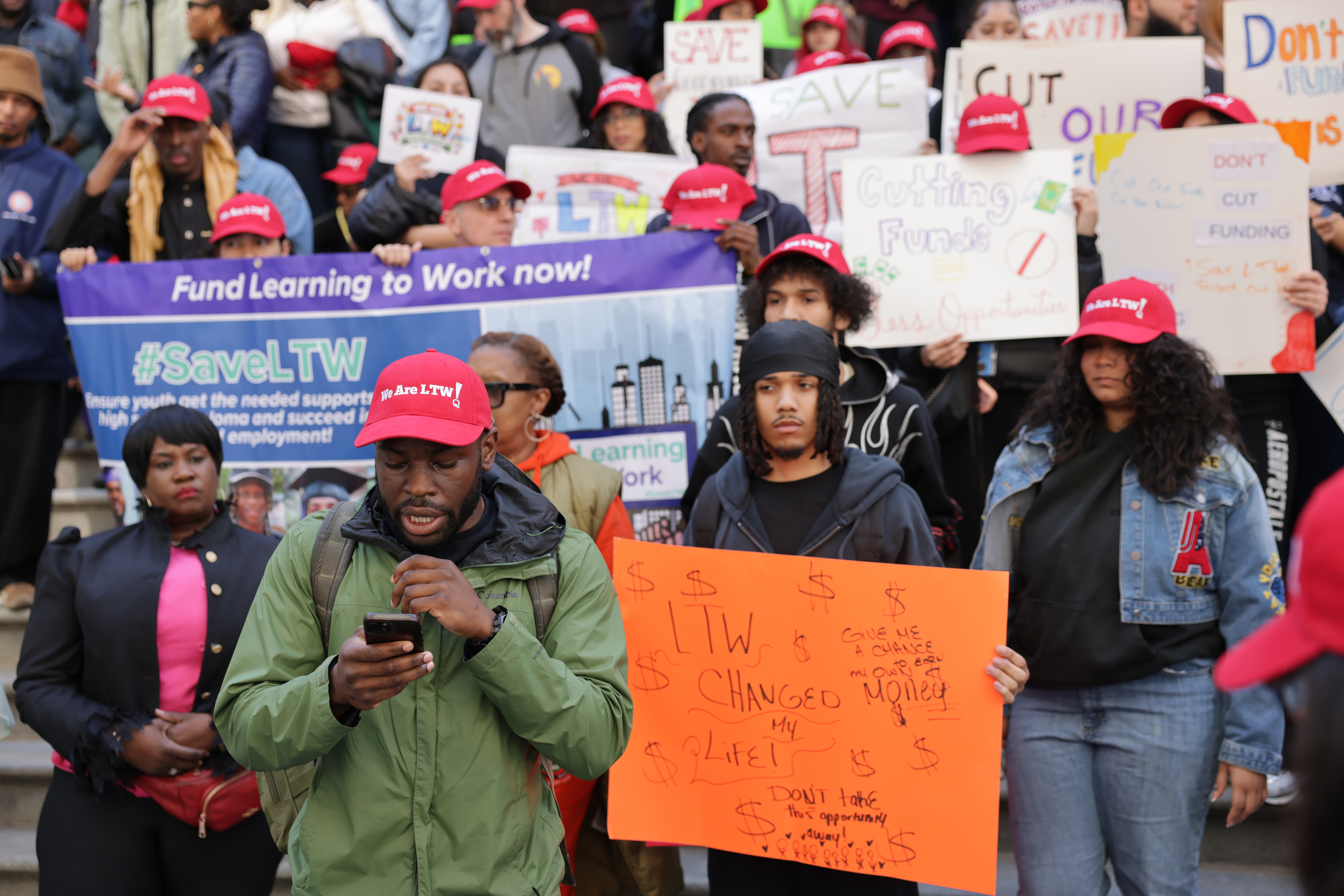
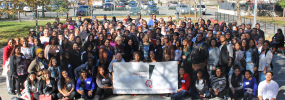
On March 26, staff and alumni from Queens Community House (QCH) Learning To Work (LTW) high school sites gathered on the steps of the Tweed Courthouse outside City Hall, joining students and partners from across New York City to call on the Mayor and City Council to baseline funding for the LTW program in the City’s Executive Budget.
Advocates are urging city leaders to restore and baseline $31 million for LTW by the FY2027 Executive Budget. This investment would ensure that schools and community-based organizations can plan ahead and continue delivering critical services without ongoing funding uncertainty.
The rally featured powerful testimony from young people directly impacted by the program. Alumni from QCH sites stood alongside students from partner organizations, including Good Shepherd Services and CAMBA, to speak about LTW’s lasting role in their educational and personal development.
Jaffari William Fox, a graduate of Voyages Preparatory School – South Queens, shared his experience: “Before I joined the program, I was heading down the wrong path. This program gave me structure, purpose, access to opportunity, to mentorship, and to a vision of what my life could actually look like.”
Queens Community House currently operates five LTW high schools across Queens. These programs provide students with academic and emotional support, career and college readiness, and access to paid internships—enabling young people to earn income, gain real-world experience, and build a pathway toward long-term success.
“LTW is funded by the NYC Department of Education and provides essential support services to students who are struggling to graduate from high school,” said QCH CEO Ben Thomases. “With 16,000 students across the City relying on this program, we are rallying to ensure its future and stability.”
Advocates emphasized that without baselined funding, programs like LTW face ongoing uncertainty that can disrupt services for the students who need them most.