
Support Queens Community House
Queens Community House provides individuals and families with the tools to enrich their lives and build healthy, inclusive communities.
In 1987, QCH launched its Case Management services with a simple but powerful goal: help older adults remain in their homes with dignity, safety, and connection. What began as in-home assessments and benefits assistance has grown into a comprehensive network of support — from home-delivered meals and care coordination to Friendly Visiting, housekeeping, and telephone reassurance for homebound older adults across Queens
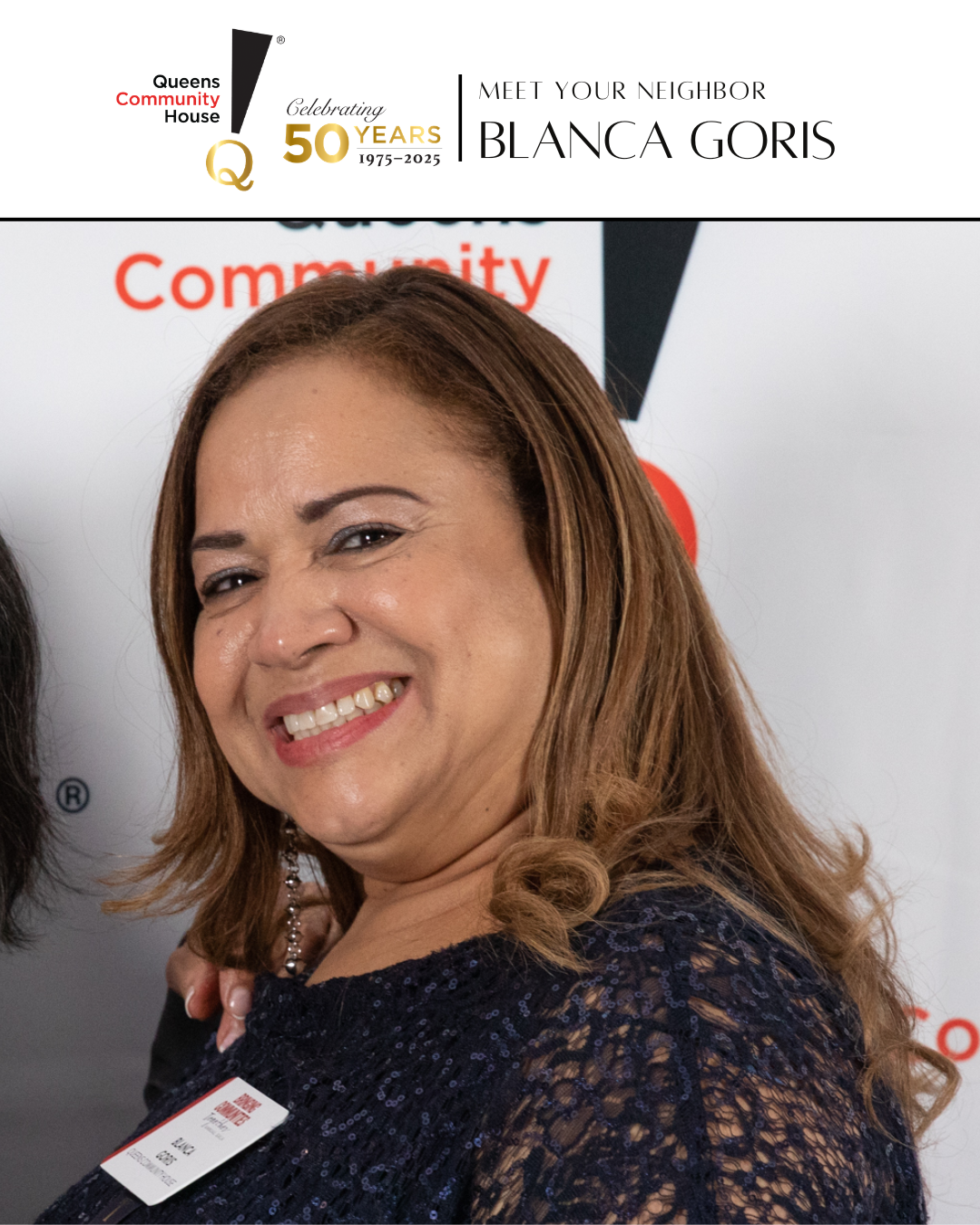
Blanca Goris, now QCH’s Division Director of Homebound Services, has been part of that evolution for more than three decades. In this reflection, she shares how the program has grown and why its mission has never changed.
"When a blizzard is coming, we don’t wait.
Last weekend, my team coordinated emergency meal deliveries before a major storm, working with caterers and partners to adjust schedules so no one would go without food. Our case managers made 250 wellness calls in one day. Drivers delivered meals in the snow and rain. That level of dedication reflects what case management services at QCH has always been about: showing up.
I came to QCH in 1993 as a social work intern. I didn’t know what population I wanted to work with until I began visiting older adults in their homes. They welcomed me in, shared their stories, and taught me resilience. I quickly realized this was the work I wanted to dedicate my life to.
QCH case management services began in 1987 to address essential needs — food, safety, and connection — helping older adults remain in their homes with dignity. When I started, we were just 11 people serving one community district. Today, we are 45 strong, serving multiple neighborhoods across Queens through case management, home delivered meals, and our Friendly Visiting Program.
The needs have grown more complex.
We now see more financial hardship, more mental health needs, deeper isolation, and older adults facing housing instability or immigration-related fears. In response, we’ve expanded into new neighborhoods and built a multilingual team that reflects the communities we serve. As part of QCH’s integrated service model, we can connect participants not just to meals and case management, but to housing, immigration services, Friendly Visiting, and older adult centers.
The work has grown more demanding, but the mission remains the same.
For me, it comes full circle. Growing up in the Dominican Republic, I was always helping neighbors however I could. I remember going to the river to wash clothes — sometimes for women who had just given birth — helping with laundry, shopping, whatever was needed. No one told me to do it. It was simply part of being in community. That sense of care and responsibility for one another has guided me ever since.
Case management is about more than delivering meals. It’s about dignity, connection, and making sure no one feels alone in their own home."
—Blanca Goris