
Support Queens Community House
Queens Community House provides individuals and families with the tools to enrich their lives and build healthy, inclusive communities.
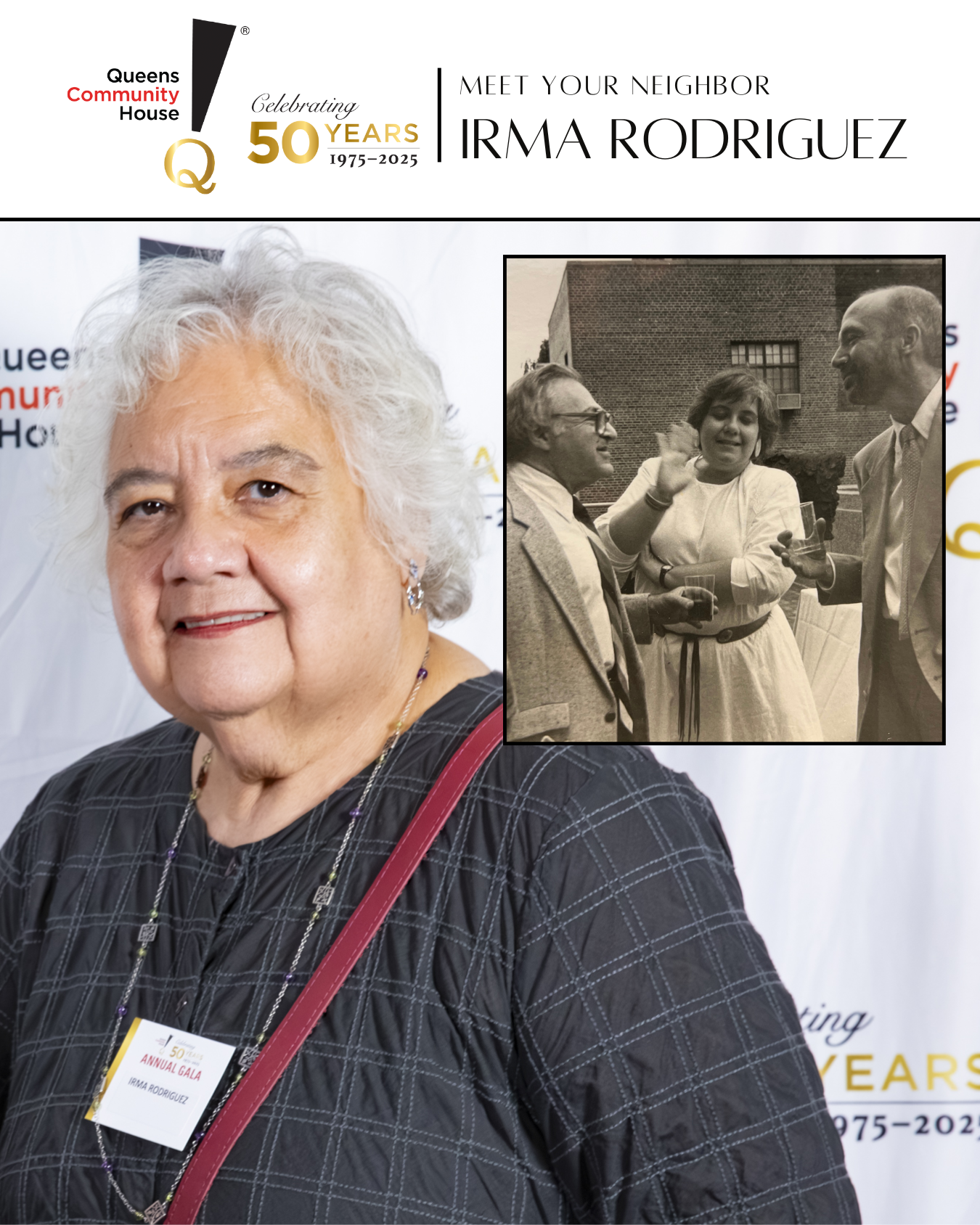
After more than 30 years at QCH, former Executive Director Irma Rodriguez reflects on a way of working rooted in trust, belonging, and mutual responsibility—core to QCH’s vision today of an empowered community where all people are engaged, supported, and have a voice.
"I spent more than three decades at the Community House, from 1983 to 2015, serving as Associate Executive Director before becoming Executive Director. When I think about the Community House, what stays with me isn’t a single program or moment—it’s a way of working, and a belief in people. From the start, we trusted that the community knew what it needed. Our role was to listen, respond, and build alongside them.
That meant leading with need, not funding. Many of our strongest programs came directly from ideas shared by students, neighbors, and community members who believed change was possible when people worked together. People were always at the center of our work, including staff. We believed in growing our own. Curiosity and commitment mattered more than titles, and people stayed because the work was meaningful.
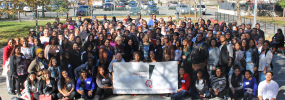
We were intentional about creating a place where people were not just receiving services, but forming relationships—with staff and with one another. The Community House was meant to be a space where people could see themselves as part of something larger, with both support and responsibility.
In the 1990s, as settlement houses returned to their social justice roots, the Community House embraced a “case to cause” approach. Community building wasn’t a department; it was everyone’s responsibility. Programs became pathways to connection and collective action.
Once staff began to see their work through that lens, participants did too. Seniors advocated for young people. Newcomers and longtime residents learned to stand together around shared concerns. Community wasn’t something we delivered—it was something people built together.
As Queens grew more diverse, we grew with it—expanding ESOL programs, immigration legal services, and creating space for honest conversation. The Community House was always clear about who it was for: everyone. No group had special privileges. Consistency built trust.
We didn’t shy away from differences or difficult conversations. We believed that real community meant making room for dialogue, disagreement, and learning—so people could move from living alongside one another to truly knowing one another.
What I cherish most is how the Community House feels when you walk through the door. People feel at home. They are supported, and they are invited to contribute.
That is community."
—Irma Rodriguez